
Comic book collectors and investors use a 10-point grading system to assign aesthetic and monetary value to a comic book. This grading system has evolved over time in an effort to bring consistency to the largely subjective task of evaluating a comic’s condition. An accurate grade requires a careful examination of a comic book that includes the front and rear covers, as well as the interior pages. Grading is, ultimately, a subjective endeavor that can generate disagreement even among experienced collectors. If the subject interests you further, I suggest picking up a copy of the Official Overstreet Comic Book Grading Guide.

This isn’t intended to be a comprehensive guide to grading comic books, but rather a general guide for how I approach condition when purchasing comic books and collections. As a buyer, I’m less concerned with a comic’s specific grade than my general impression of the book’s condition. I think in terms of ‘high grade’, ‘mid-grade’ and ‘low-grade’.

I first look at the condition of a comic book’s cover. I check for spine damage, condition of gloss, signs of wear, integrity of the corners, and the condition of the staples. The back cover is often a better indicator of a book’s condition because the paper is often white and more prone to revealing dirt and wear. Next I peruse the interior pages for stains, tears, tanning, and the general condition and color of the paper. Older books are almost always tanned by age, but brittle pages are a concern. Missing pages are of course a huge problem, but coupon cutouts and missing panels are also catastrophic to a comic book’s value.

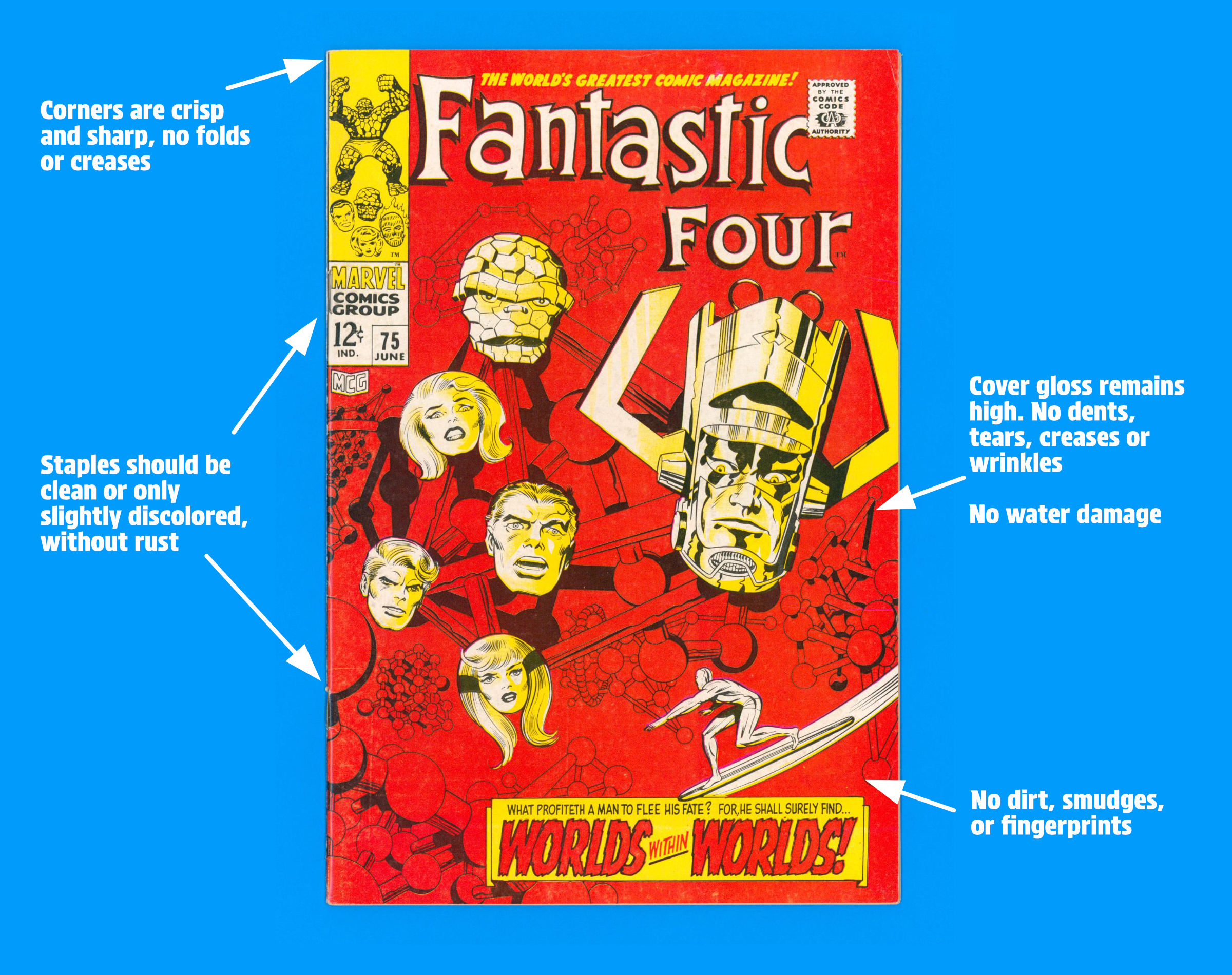
A High-Grade Older Comic Book

This copy of Fantastic Four 75 was published in 1968 and still shows beautifully. You may see minor defects such as stress on the spine and slightly blunted corners, but overall it’s a gorgeous, highly collectable comic book. (And I love the awesome artwork by Jack Kirby!) Obviously, comics in high-grade condition command the best prices.

A higher-grade older comic book

A Mid-Grade Comic Book [Fine/Very Fine 7.0 – VG+ 4.5]

This copy of Amazing Spider-Man #87 doesn’t look too bad at a glance. With a close look you can see how the spine and staples show some wear. The cover has lost some of its original gloss, and you can spot storage wear especially along the spine. It’s clearly been read a few times. The corners are no longer crisp, but show slight signs of blunting. While this comic remains very desirable, it is no longer a high-grade collectible. It’s value in resale will be noticeably less than a copy in high-grade. To illustrate this more clearly, this Amazing Spider-Man comic in very high grade will retail for $120 or more, but it’s retail value in this condition is roughly half that. Especially at higher grades even small defects will greatly impact a comic book’s overall value. 
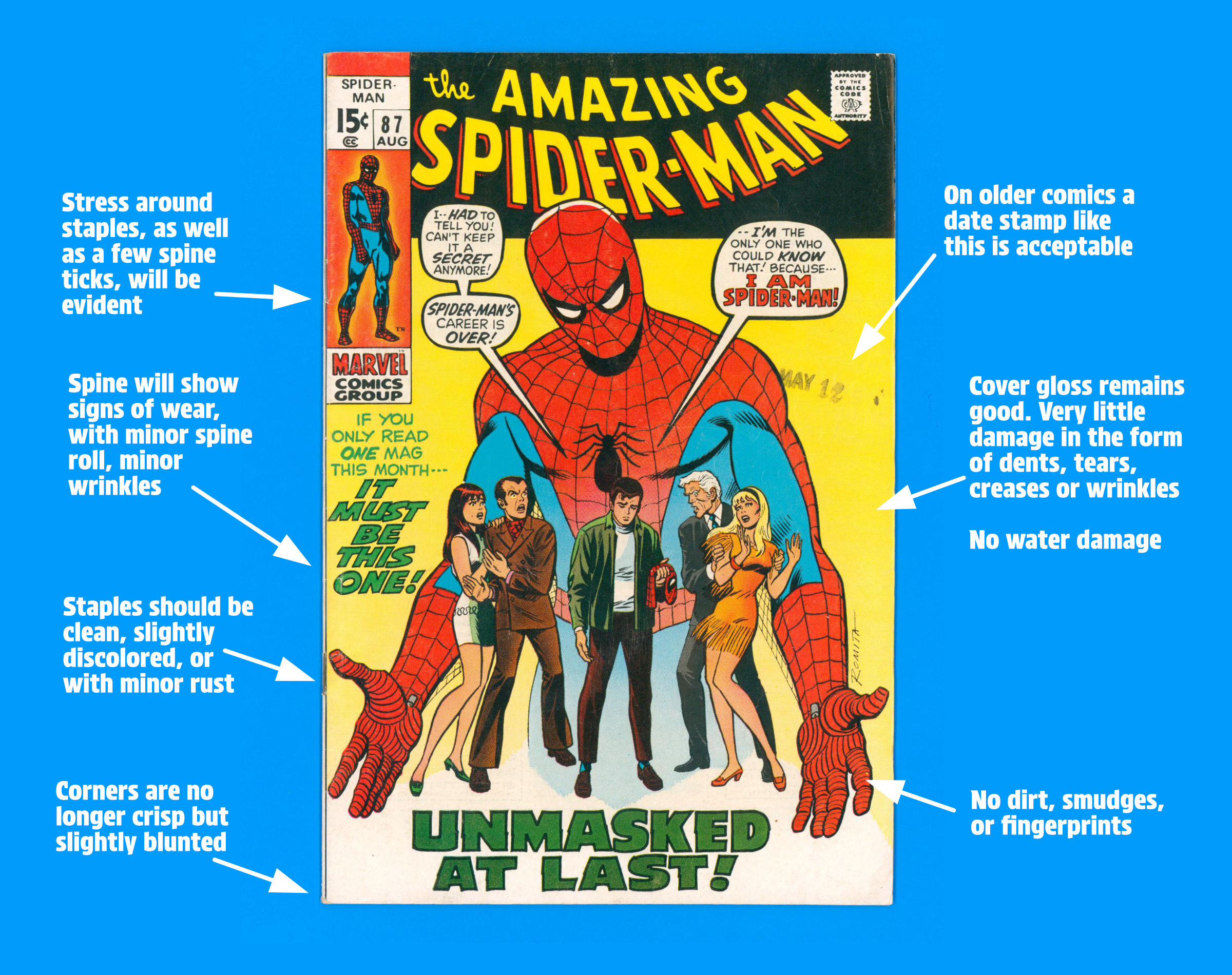
 

A mid-grade comic book

Lower-Grade Comics [Very Good 4.0 and lower]
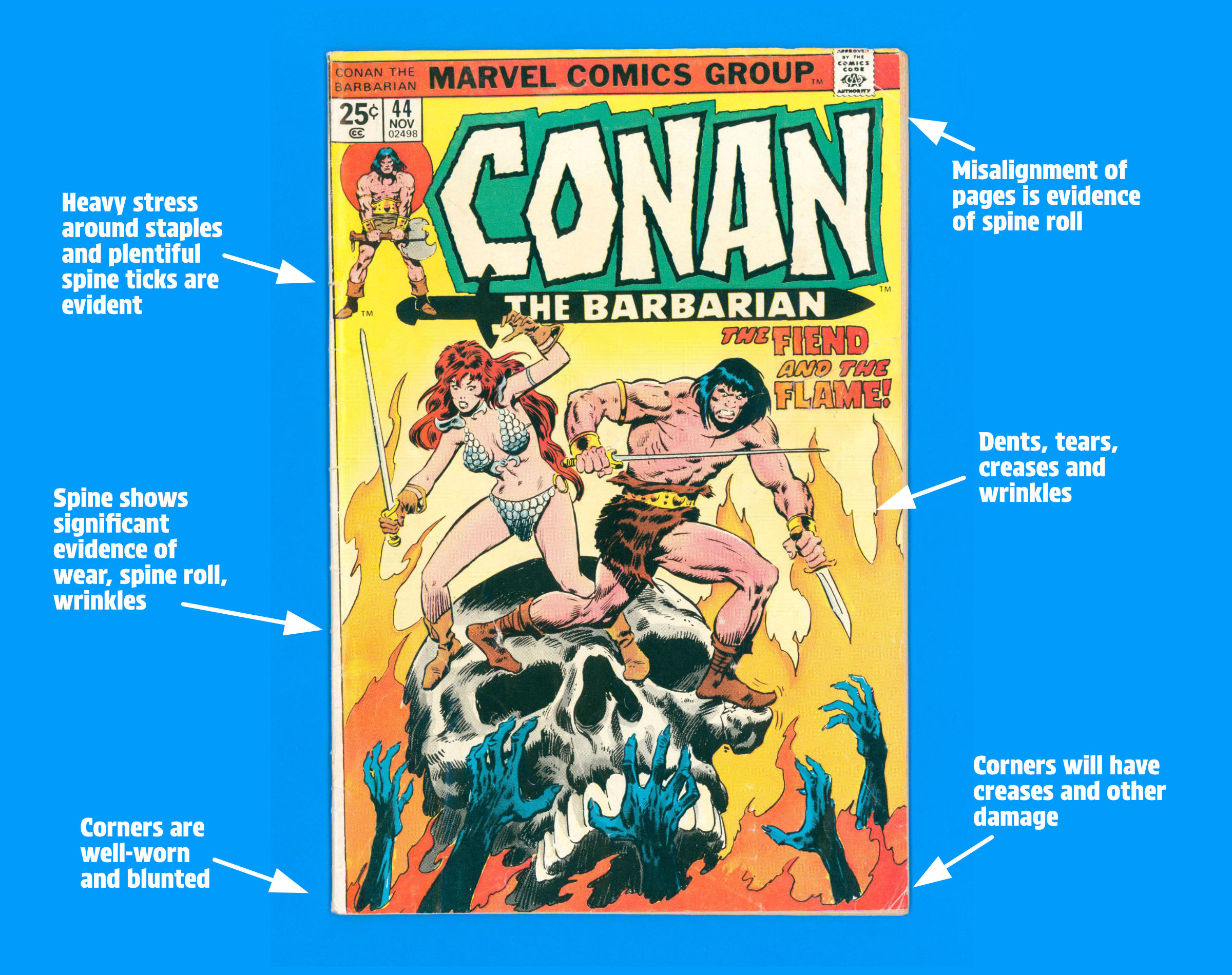
It’s fairly normal for folks who aren’t familiar with the comic book collecting hobby to think their comics are in better shape than they are. This copy of Conan the Barbarian #44 is complete and readable, but its accumulation of defects puts it below the threshold of what I personally consider collectible. I’ll still buy it as part of a collection, but a comic in this condition is difficult to resell, and therefore not a book I’ll pay much for. It makes a nice reader copy!
 
A lower-grade comic book
 

Really, Really Low-Grade Comics [Fair/Good 1.5 and lower]

Then there are the books which are too beat up and destroyed to be collectible. Okay, there may be exceptions, but comics that are falling apart, missing pages, discolored, sun-damaged and otherwise destroy are not collectible. There are uncommon exceptions. Poor-grade comics from the sixties and earlier may still be collectible to some base simply on scarcity. And there are some high-value comics that collectors will buy no matter how destroyed they are. But in general, I won’t buy comics in poor condition.